
Circuit Board Assist in Minimizing Data Errors
A circuit board is an essential component in electronic devices, providing a platform to mount and interconnect components. Its function is to transfer electrical signals between them, thereby enabling the device to perform its intended functions. Proper circuit board design and manufacturing processes are critical to ensure that the device operates as expected. However, problems with circuit boards can arise, such as shorts, overheating, or component failure, requiring advanced troubleshooting skills.
One of the most common issues with circuit board circuit board is the presence of unrouted signal traces. This problem can lead to erratic performance in the device and is usually caused by an error during the design or manufacturing process. A specialized technique called impedance matching is used to equalize trace lengths, which can help reduce signal lag and jitter. Other techniques for minimizing jitter include using guard traces between high-speed signal traces, and avoiding crosstalk by utilizing differential pairs of traces.
Another common issue with circuit boards is poor thermal management. This can cause overheating of components and lead to reduced performance and premature failure. To improve thermal performance, designers should use thermal vias and copper pours strategically to dissipate heat. They should also use a thermal simulation tool to check the design and identify potential hot spots.
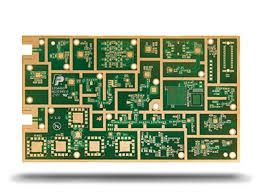
How Does a Circuit Board Assist in Minimizing Data Errors?
Finally, a circuit board may experience shorts or open circuits due to inadequate grounding or incorrect terminations. These issues can be difficult to detect and resolve without the help of a specialized testing tool. However, a reputable PCB manufacturer will offer troubleshooting services that can quickly and efficiently pinpoint the source of a problem.
A circuit board, also known as a printed circuit board (PCB), is the foundation of nearly all electronic devices. These boards are meticulously designed to connect and support electronic components, enabling the seamless flow of electricity to perform complex tasks. Whether in smartphones, computers, medical equipment, or automotive systems, circuit boards play an essential role in modern technology.
Pads are the small areas on a circuit board that hold the component leads and provide a surface for soldering. The size and shape of pads are crucial to the functionality of a circuit board. They should be large enough to accommodate the component lead and have a smooth surface for soldering. Moreover, they should be positioned close to each other so that there is no excessive distance between them.
In addition to pad dimensions, designers should also pay attention to the thickness of traces and their current-carrying capacity. Thicker traces can handle higher currents, but they can also increase resistance and cause voltage drops. In contrast, thinner traces can carry lower currents, but they are more susceptible to noise and interference. A careful balance of current requirements and board thickness is needed to achieve optimal performance. Other important considerations include the use of a solid ground plane, decoupling capacitors, and controlled rise and fall times to prevent ground bounce and other electromagnetic interference (EMI).


